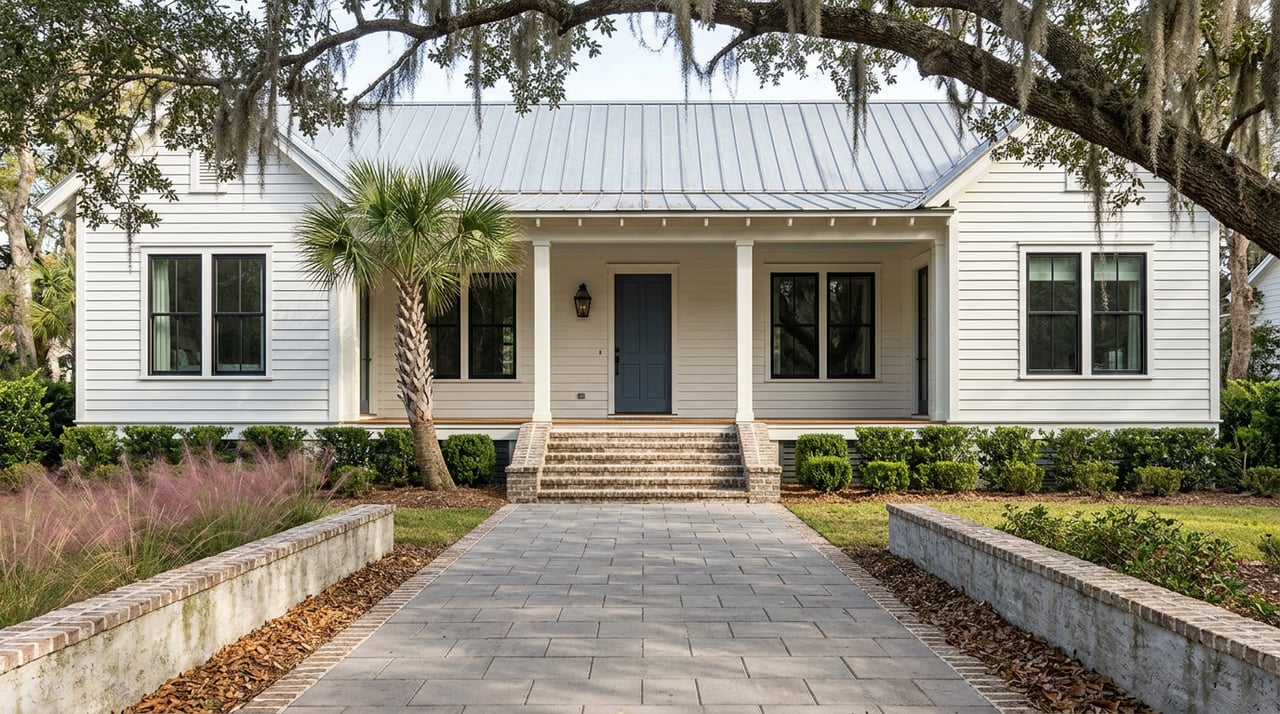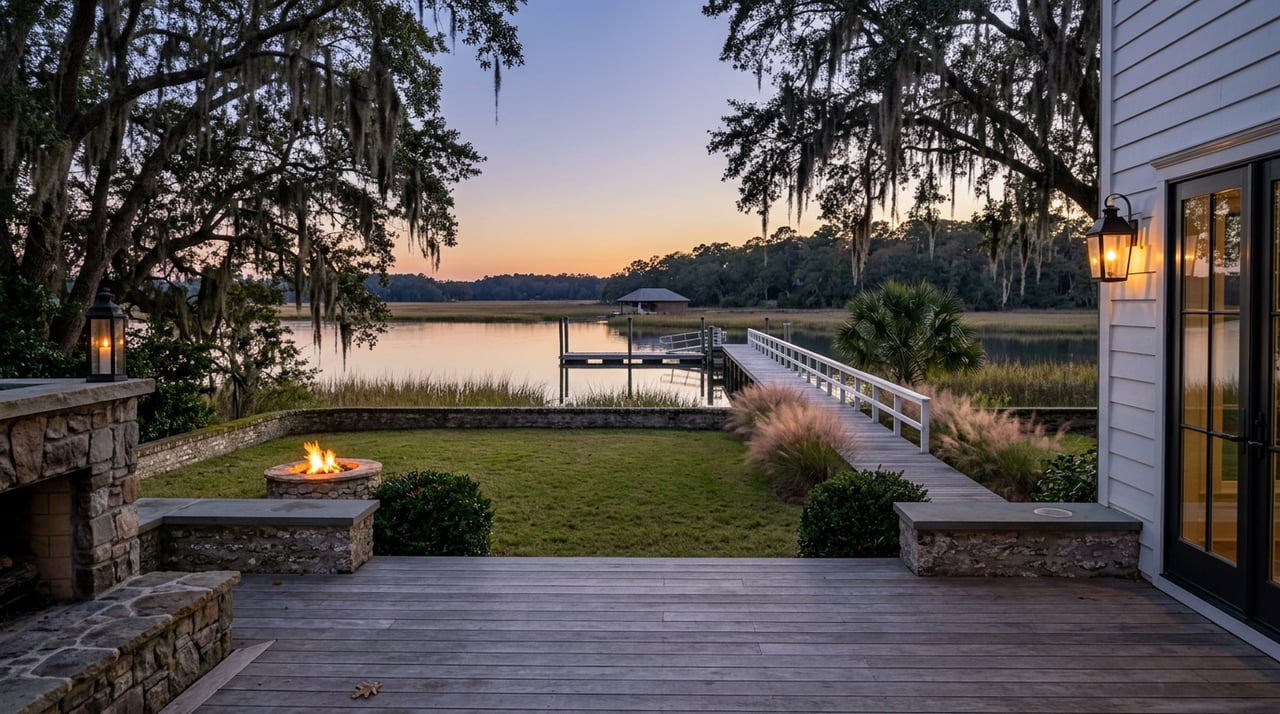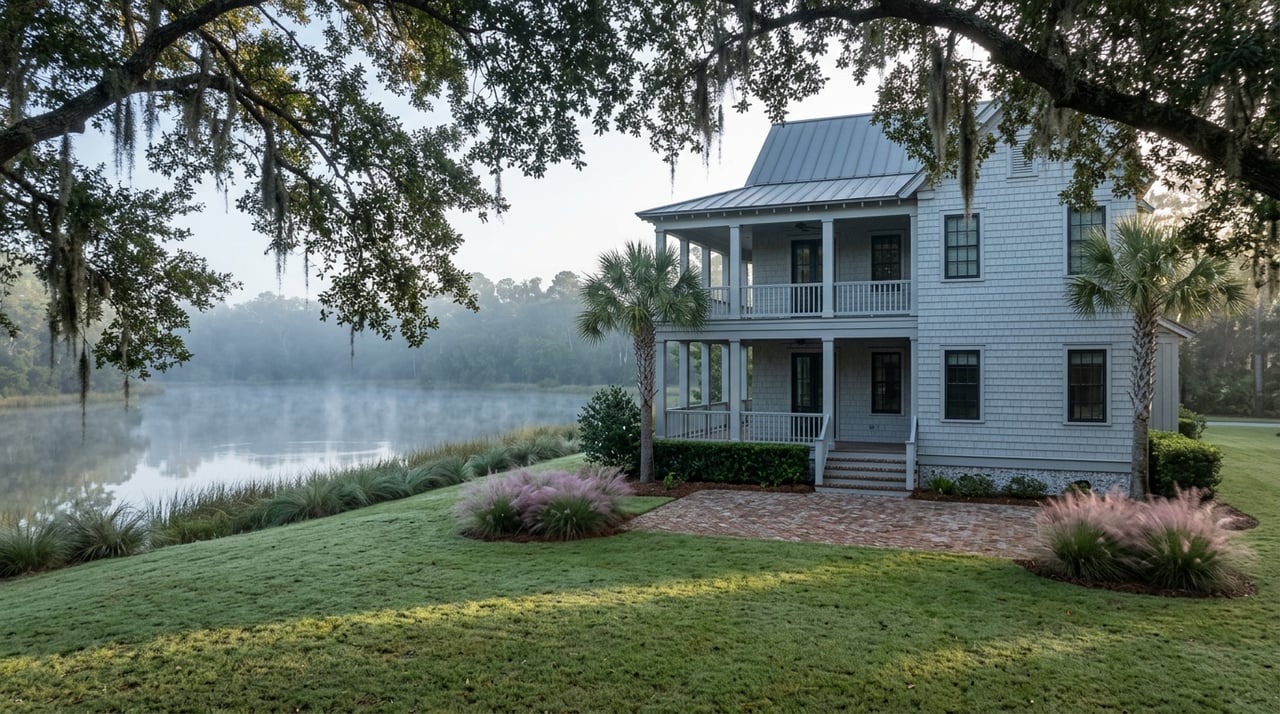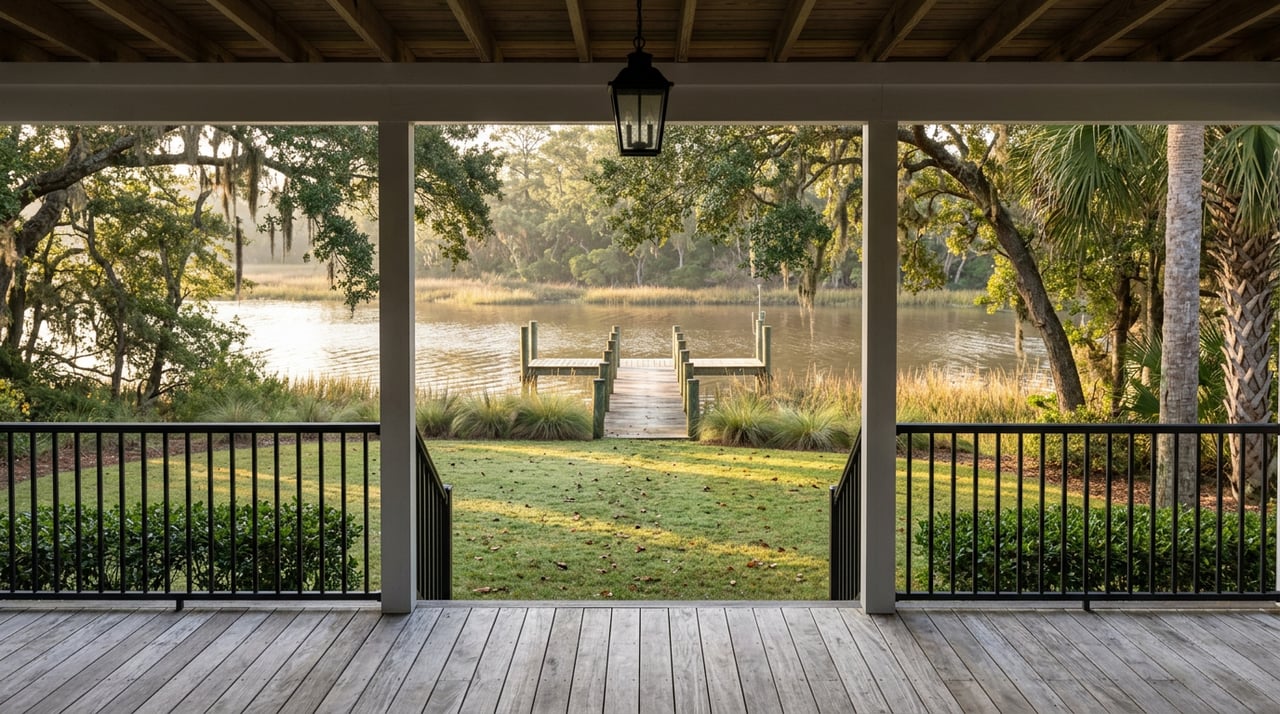
Most evenings, Shirley and Joe Newton pour a glass of wine and walk out to their back patio to watch the sky over Otter Creek fill with birds. Spoonbills, egrets, herons, and wood storks converge on a small island of trees just past their yard, and at dusk hundreds of white ibises drop in to roost for the night. By morning, they all lift off again at once. "It's really spectacular to see," Joe told a reporter this spring, describing a ritual that's played out behind their home for as long as anyone in the neighborhood can remember.
No one actually knows how old the rookery is. It's never had a sign, a boardwalk, or a listing in any birding guide. For years it's simply been Indigo Run's best-kept secret, tucked behind a stand of trees on a creek most residents drive past without a second look. This summer, that changed. A permit application put the rookery's exact coordinates into a public record, and a neighborhood that had quietly enjoyed the birds for decades suddenly found itself organizing to protect them.
What's Actually Nesting on That Island
The rookery sits on a tiny tree island in Otter Creek, a tidal tributary that winds through Indigo Run on its way toward the Broad Creek shoreline the community fronts. During nesting season, the island fills with roseate spoonbills, a species originally native to Florida that has been pushing farther up the coast in recent years, alongside great egrets, several kinds of herons, wood storks, and enormous evening gatherings of white ibis. Local wildlife photographer Susan Martin has been documenting the site for more than fifteen years and has watched activity ebb and flow with the seasons, including a sharp decline after Hurricane Matthew tore through the island in 2016.
Indigo Run's own trail literature nods to this without naming it outright, describing seven miles of leisure trails that wind past lagoons, wildlife rookeries, and catch-and-release fishing on Otter Creek. Most people who walk or bike those trails have no idea they've passed within a few hundred yards of one of the more active wading bird colonies on the island.
The Summer the Secret Got a Permit Number
In February 2026, an 11.3-acre parcel just across the creek from the rookery sold for $7.2 million to MCP Driftwood HH Property Owner LLC, an entity connected to Charleston-based Material Capital Partners. The firm specializes in build-to-rent communities and is behind the Driftwood project, a proposed 58-unit long-term rental townhome community at 229 Marshland Road. Site plans show the development sitting close enough to the creek bank that only a thin buffer of trees would separate new construction from the nesting island.
The developer applied for a permit through the South Carolina Department of Environmental Services, and the public comment window closed on May 12, 2026. Hilton Head Audubon president Kay Grinnell submitted a formal letter urging the strictest possible environmental review, writing that cumulative impacts in sensitive coastal areas must be carefully evaluated and that disturbed nesting habitats may never fully recover. Architects with Hilton Head-based Wood+Partners submitted conceptual plans to the town's Design Review Board on May 13, 2026, and the board was scheduled to take the project up at its June 10 meeting.
David McNair, president of the Indigo Run Community Owners Association, has lived on Hilton Head since 1979 and spent decades as a developer himself before joining the COA. He's not arguing the land shouldn't be built on.
"They have a right to develop the property. They just need to do it in a way that's considering nature and the trees and the environment, what Hilton Head's all about, really."
The Park Everyone Wants Isn't Coming
The instinct among neighbors watching this unfold has been to point toward Port Royal, where the town turned a similar rookery site into Cypress Wetlands, a public park with a boardwalk that draws birdwatchers from across the Lowcountry. Residents including Bill Bosley, another local wildlife photographer who has documented the site extensively, have floated the idea that Hilton Head could do the same here: buy the parcel, add a small parking area and a boardwalk, and turn a private secret into a shared amenity.
It's a good idea, and it's also already off the table. When the Island Packet asked the Town of Hilton Head whether it could purchase the 229 Marshland Road property, Interim Communications and Marketing Director Kelly Spinella confirmed the land had been recently acquired and was not currently for sale, referring to the February sale to Material Capital Partners. The town does run an active land conservation program funded in part through a real estate transfer tax, and according to an October 2025 town news release it had spent more than $44.6 million on protective purchases since 2023, preventing construction of 424 dwelling units along with hotel rooms and commercial space elsewhere on the island. That program has real teeth. It simply arrived too late for this particular parcel, which was already privately sold before most residents knew there was anything worth protecting.
That's the piece of this story that hasn't quite landed on Nextdoor yet. The comparison to Cypress Wetlands is emotionally satisfying, but the mechanism that made Cypress Wetlands possible, public ownership, isn't available here. Whatever protection the rookery gets will have to come from the permitting and design review process, not a buyout.
What Residents Are Actually Fighting For
That's why McNair's position matters more than it might first appear. Rather than opposing Driftwood outright, he's focused on the specifics of the site plan, particularly the setback from the creek bank and how much of the existing tree canopy survives construction. According to site development documents submitted to SCDES, only two trees on the entire property are currently marked for protection. McNair has argued that if the developer widened the buffer and preserved more of the existing canopy, the impact on nesting birds could be meaningfully reduced without stopping the project.
It's a narrower ask than "save the rookery," but it's also the one lever residents actually have. The Design Review Board's job is specifically to weigh in on site design and aesthetics, which puts tree preservation and setbacks squarely within its authority in a way that halting the development entirely is not. The land was already part of a long and complicated ownership history. For more than a century it belonged to descendants of Dennis Allen, one of many Black landowners who purchased property on former plantations after the Civil War, and a heirs' property dispute that began in 2009 eventually split the tract into two lots in 2022. The southern lot remains with Allen's descendants. The northern lot is the one now headed toward construction. None of that history changes the permitting math, but it's worth knowing before assuming this is a simple story of a faceless developer versus untouched nature.
How to See It Without Getting in the Way
For residents curious about the rookery itself, the respectful way to view it is from Indigo Run's own trail system rather than by approaching private backyards along Otter Creek. The community's leisure paths run within sight of several lagoons and creek frontage where wading birds are active well beyond nesting season, and Otter Creek's catch-and-release fishing areas put you along the same waterway without crossing into anyone's yard.
A few notes for anyone planning a look:
- Spoonbills and wood storks are most active during spring and early summer nesting season, roughly matching the timeline of this year's permit dispute.
- White ibis gatherings tend to peak at dusk, when hundreds arrive to roost for the night before dispersing again at first light.
- For a public alternative with a real boardwalk, Hilton Head Audubon maintains the Audubon Newhall Preserve on Palmetto Bay Road, where more than 140 species have been recorded.
- Binoculars matter more than a long lens here. Most of the activity is on the water side of the creek, not close to any trail.
What Happens Next
Whatever buffer or setback conditions end up attached to Driftwood's approval through that design review process will determine a lot about whether the rookery keeps functioning the way it has for years. Susan Martin's fifteen years of observation already show a colony that survived a hurricane and came back diminished but intact. Whether it survives a townhome community twenty yards away probably comes down to how many trees are left standing when construction starts, not whether it starts at all.
That's a smaller, more specific outcome than the park some residents were hoping for. It's also the realistic one, and it's worth knowing the difference before the next Nextdoor thread turns into another round of the same conversation.
If you're curious about life inside Indigo Run beyond this summer's headlines, from the trail system to the Golf Club to what the community's quieter, no-short-term-rental character actually feels like day to day, Live in the Lowcountry keeps a close eye on what's happening across Hilton Head's neighborhoods. Join the VIP List to get that kind of on-the-ground read before it shows up anywhere else.