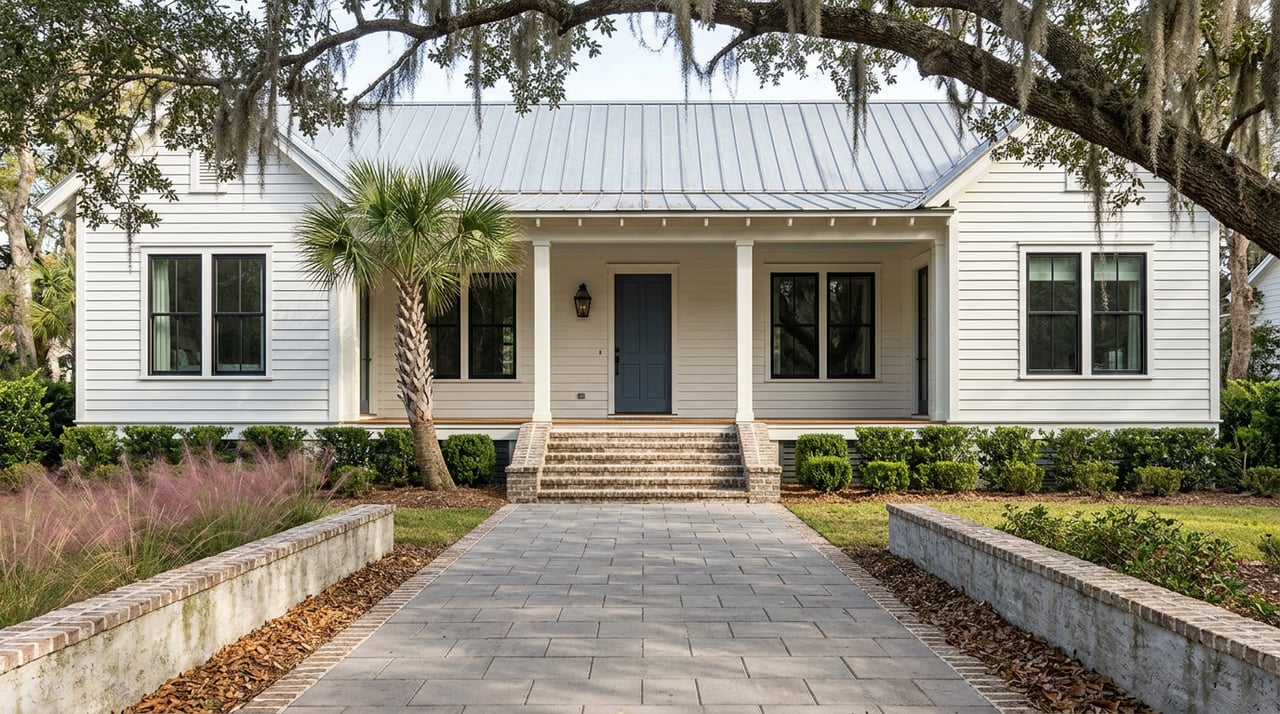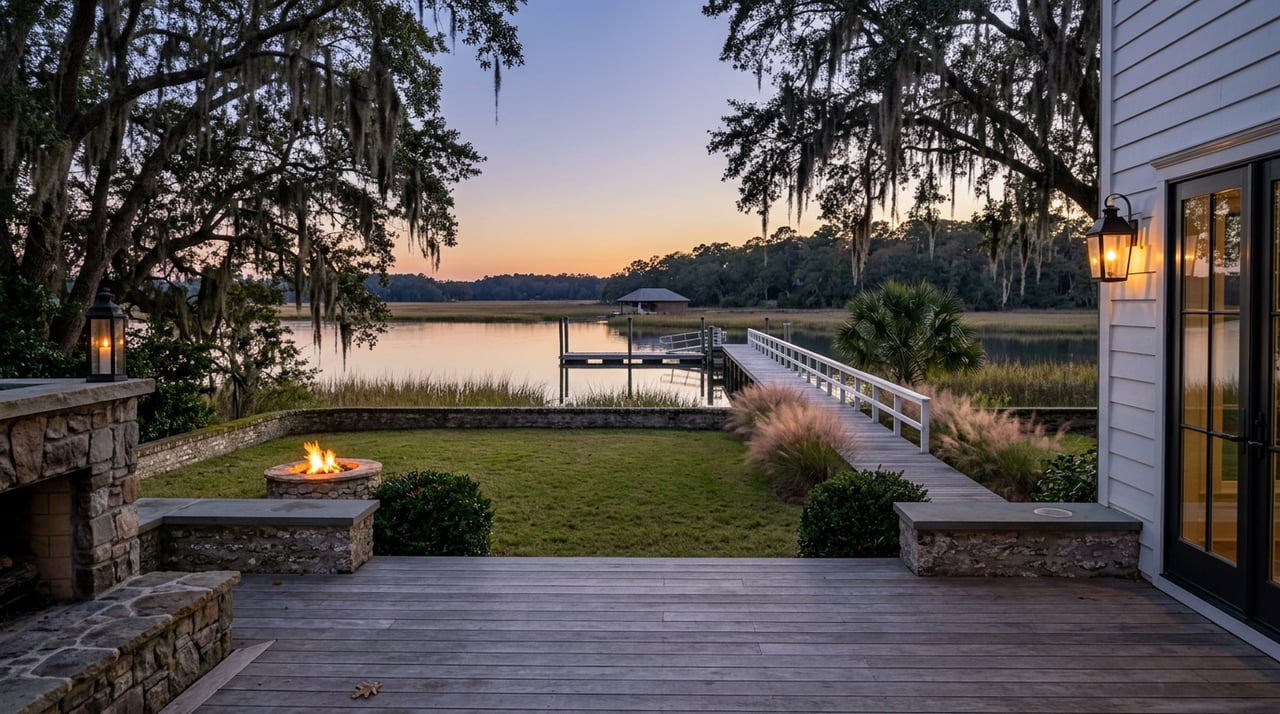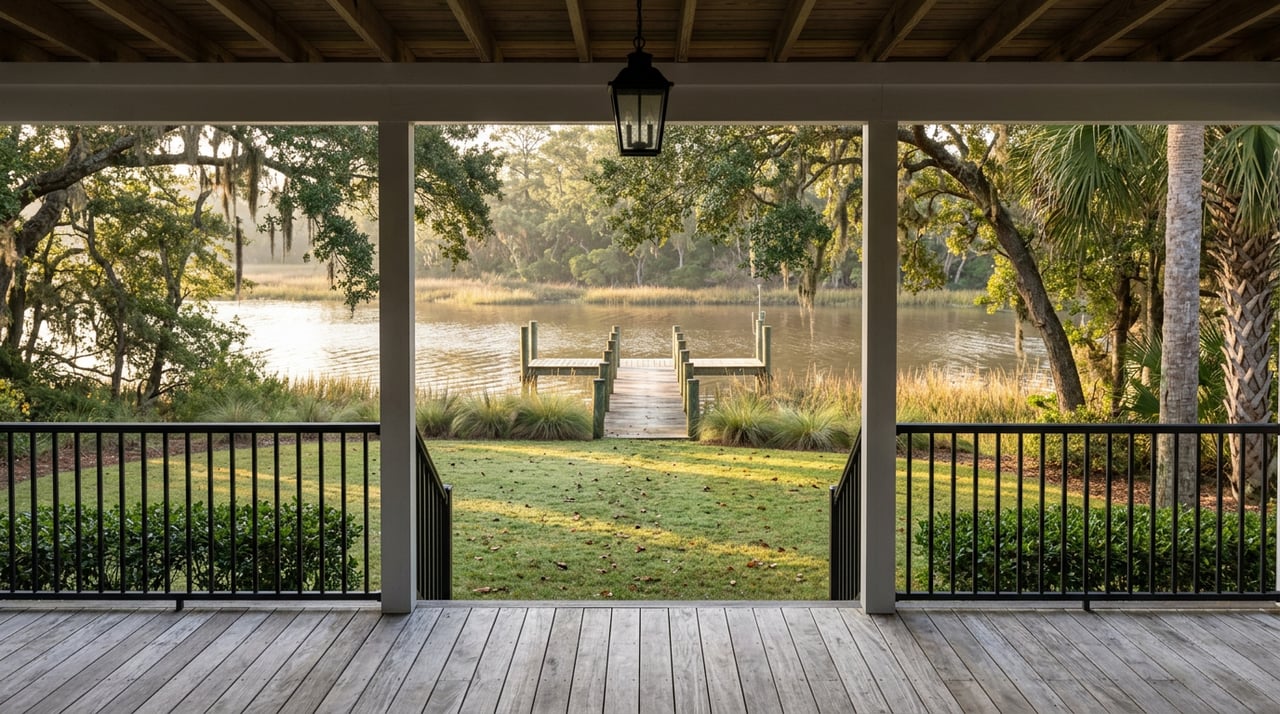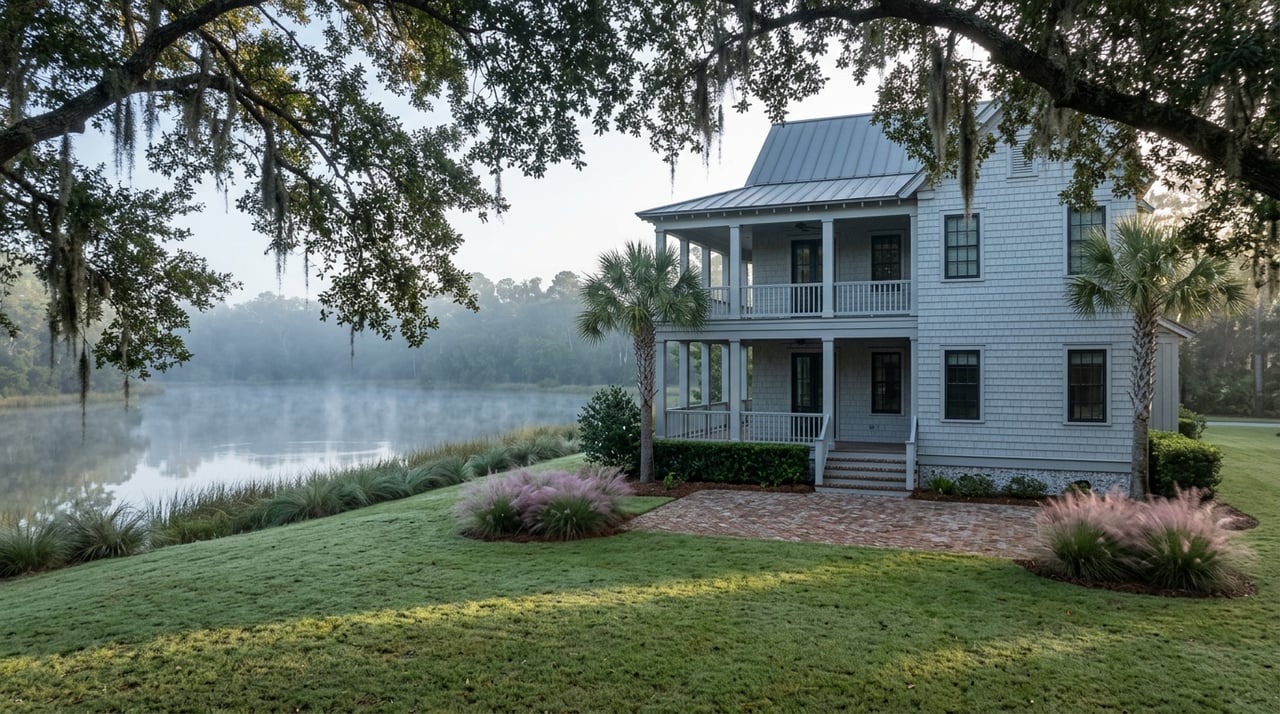
Every property owner in Long Cove Club got the same line item this summer: a $7,866 special assessment, with billing that began in June, tied to a Clubhouse Enhancement Project that broke ground in July. It shows up on the club's own fees and facts page, payable as a lump sum or financed over eight years with interest. Nobody hid it. But nobody puts it on the MLS listing either, and that gap is exactly why it matters right now if you're buying, selling, or just trying to understand what a home in Long Cove actually costs.
A listing price on Hilton Head Island tells you what a house is worth. It rarely tells you what owning it requires. In a mandatory-membership community like Long Cove, that difference is not small, and this assessment is the clearest evidence yet of how the two numbers diverge.
The Bill Behind the Listing Price
Long Cove's median home price came in at $1,499,000 as of March 2026, roughly double the wider Hilton Head Island median, which Redfin data puts at $767,000 over the three months ending June 2026. That gap is not random. Membership at Long Cove is not optional the way it is at some other Hilton Head communities. Buy the house, and you're automatically a club member.
That membership carries its own price tag. Reported figures put the one-time initiation fee at $50,000 as of 2025, with annual dues that have run somewhere between roughly $17,000 and $19,500 depending on the year and source. Layer the new $7,866 assessment on top, and the true first-year cost of owning in Long Cove looks like this:
- Purchase price (median around $1.5 million as of March 2026)
- One-time initiation fee, reported near $50,000
- Annual club dues, roughly $17,000 to $19,500
- The new special assessment, $7,866 per property, lump sum or financed
None of that shows up in a portal's price-per-square-foot calculation. All of it shows up on the closing statement or the first membership invoice. Buyers who only compare Long Cove's sticker price to a house in a non-club neighborhood are comparing two different products wearing the same clothes.
Where the Money's Going, and Why That Number Is Smaller Than It Sounds
Long Cove has roughly 570 homesites. Multiply that against the $7,866 figure and the club is raising something in the neighborhood of $4.5 million for this project. Compare that to the last time Long Cove touched its clubhouse in a serious way: a $6.4 million renovation and expansion completed in 2013, a project that earned a Bronze Award for Clubhouse Renovation of the Year from Golf Magazine in 2014 and added a members' dining hall, a commercial kitchen, and new locker rooms.
A $4.5 million enhancement following a $6.4 million overhaul thirteen years earlier reads less like a community catching up on deferred maintenance and more like a club on a deliberate reinvestment cycle. That distinction matters to a buyer. Clubs that let facilities decay for a decade and then hit members with an emergency assessment are a different risk profile than clubs that budget for periodic upgrades and ask members to fund them on a predictable rhythm.
There's a governance detail buried in Long Cove's history that reinforces this. A 2008 South Carolina Court of Appeals case, Baumann v. Long Cove Club Owners Association, dealt with a 2006 vote over a $525,000 clubhouse redecoration. The community's covenants at the time required capital expenditures above $150,000 from certain reserve funds to go before the membership, either as part of the annual budget or in a standalone referendum. In other words, this is not a board spending money in a vacuum. It's a structure where members vote on how their own reinvestment dollars get used, and the current assessment sits squarely in the tradition that case documents. That's worth knowing before you assume a special assessment is a red flag. In a club like this, it can be the opposite: proof the reinvestment mechanism still works.
What This Means at the Closing Table Right Now
Here's the part that actually changes a transaction. Because the assessment can be financed over eight years, any Long Cove resale between now and roughly 2034 is going to involve a conversation about who covers the remaining balance. That conversation doesn't resolve itself. It gets negotiated into the contract, the same way any other homeowners association special assessment does anywhere else.
The standard menu looks like this in most club and HOA transactions: the seller pays the balance in full before closing, the seller offers a credit and lets the buyer manage the payoff, the two sides split the remaining cost, or the buyer assumes the balance in exchange for a lower purchase price. Which option makes sense depends on timing. If a homeowner already paid the assessment in lump sum, there's nothing left to negotiate. If they're three years into an eight-year payment plan, that remaining balance is a real number that belongs in the purchase agreement, not a surprise that shows up after closing.
If you're evaluating a Long Cove property this year, ask directly whether the seller has paid the assessment in full or is financing it, and get the exact remaining balance in writing before you're anywhere near a purchase agreement. Sellers who get ahead of this, disclosing the payoff status early and offering a clear credit or price adjustment, tend to make their listings easier to move. Buyers who skip the question tend to find it at the closing table instead, which is a worse place to negotiate from.
How This Compares Elsewhere on the Island
Not every Hilton Head community stacks costs this way. Sea Pines, for comparison, runs its 2026 Community Services Associates assessment at $2,065 for improved lots and $1,233 for unimproved lots, a property owners association fee rather than a bundled club membership. Golf, tennis, and other club amenities there are typically separate, optional memberships layered on top of that base assessment, not something every buyer is required to carry.
Long Cove's model bundles the two together. You don't choose whether to join the club. You choose whether to buy the house, and the club comes with it. That structure is common across Hilton Head's private golf and marina communities, but the size of the bundle, and how often it gets revised through assessments like this one, varies enough that it deserves its own line of questioning in any serious comparison shopping between neighborhoods.
The Thesis, Plainly
A special assessment on a listing you're considering is not automatically bad news. At Long Cove, this one looks like evidence of a functioning capital cycle backed by a documented member-vote structure, not a sign of a community scrambling to catch up. But "not bad news" is not the same as "not your problem." The dollar figure is real, the payment window is long, and the only place that gets sorted out is in the contract you sign. Treat it as a line item to negotiate, not a footnote to skim past.
A Few Direct Questions
Does the assessment transfer with the property if I buy a home mid-payment plan? The obligation runs with whoever holds the payment plan through the club, which is why the payoff status needs to be nailed down in writing before you make an offer, not assumed from the listing description.
Can I pay off the assessment early if I finance it? The club's published terms allow either a lump sum or financing over eight years with interest, which suggests early payoff is structurally possible, though the specific process should be confirmed directly with Long Cove's membership office before you rely on it in a negotiation.
Is a special assessment like this normal for a private club community on Hilton Head? Periodic capital assessments are common wherever club membership is mandatory and amenities age. What varies is scale and governance. Long Cove's history of member-referendum spending thresholds and its 2013 renovation cycle give this one more context than a one-line disclosure would suggest.
If you're weighing a purchase in Long Cove, or trying to figure out what a listing there actually costs you once membership and assessments are on the table, that's exactly the kind of math Live in the Lowcountry walks clients through before an offer ever goes in. Join the VIP List and we'll make sure you're looking at the real number, not just the one on the listing sheet.